

.png)
Bespoke Pergola Cost Spain: What to Budget for in 2026
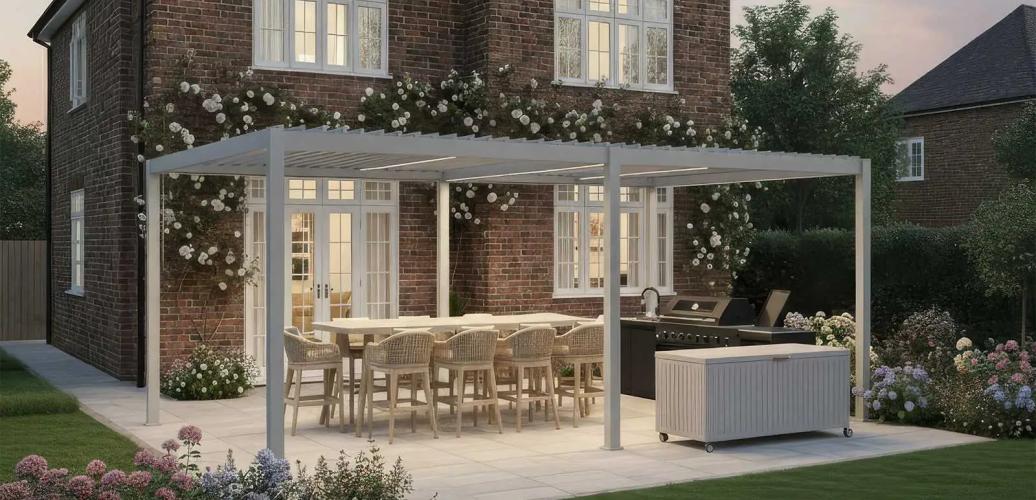
Commissioning a bespoke pergola means precise budgeting, not guesswork, especially given the specific building rules and coastal conditions of southern Spain. Standard kits offer predictable pricing. A custom build introduces variables in engineering, automation, and site logistics that can shift the final figure substantially. Knowing where your project sits within current market tiers keeps the quotation phase free of surprises and puts your budget where it matters for long-term Mediterranean living.
Understanding Bespoke Pergola Pricing Tiers in Spain
Realistic budgeting means separating projects into categories by structural complexity and intended use. Blur those lines and your expectations go with them. Treat these brackets as starting points, not fixed menu prices: span, wind load requirements, and finish specifications on your own property will move the number up or down.
Entry-level custom aluminium structures
The most accessible tier of bespoke work typically means fixed-roof aluminium frames or manually operated louvre systems built for shade rather than full weather protection. They give you a permanent architectural feature without the expense of motors or integrated drainage channels, which suits terraces where the odd bit of rain getting through isn't a problem. Costs here come down to raw material volume and basic fabrication, so you get a durable alternative to timber without paying for a fully automated bioclimatic system.
Mid-range bioclimatic systems
This bracket is the core of the modern Spanish market: motorised adjustable louvres with integrated guttering and perimeter seals. A mid-range bioclimatic pergola keeps costs down by using standard-sized modules configured to fit your space, rather than fully custom-engineered components. You get genuine all-weather use and ventilation control at this level, though extras like heating or advanced lighting are separate line items, and enough of them will push the project toward the top of the band.
Premium integrated outdoor living solutions
High-specification builds work as true extensions of the indoor living area, with smart home integration, infrared heating, LED lighting circuits, and glass sliding enclosures built into the pergola structure itself. These projects often need structural calculations for larger spans and heavier loads, particularly where they support retractable fabric roofs or double-glazed panels. The bespoke pergola cost Spain buyers meet at this tier reflects not just the hardware but the design consultation and technical planning needed to fit multiple mechanical systems into a single weatherproof structure.
Aluminium Pergola Price Factors and Material Quality
Not all aluminium extrusions perform equally in coastal environments. The specification gap between entry-level and marine-grade profiles affects both longevity and initial outlay directly. Choosing the right material grade is a decision about total cost of ownership over decades, not just the installation invoice.
Powder-coated vs anodised finishes
Standard polyester powder coating protects inland properties well enough but can degrade faster in salty air unless specified to marine-grade standards like Qualicoat Seaside Class. Anodised finishes give coastal villas better corrosion resistance, because the process builds a harder, integral surface layer that doesn't chip or peel, though it adds to manufacturing lead time and unit cost. Paying for the higher-specification option pays off by preventing oxidation stains on coastal terraces and avoiding repainting cycles down the line.
Glass roof vs louvred bioclimatic systems
Fixed glass roofs generally cost less upfront than adjustable louvre systems, since they don't need motors, drive shafts, or complex sealing mechanisms. But glass creates a greenhouse effect in summer that pushes up cooling costs, while adjustable aluminium louvres cool the space passively through ventilation. Factor in the running costs and the shading blinds you'll likely need under a fixed glass panel, and the price gap between the two approaches narrows a lot.
Bioclimatic Pergola Cost Spain: Automation and Features
Automation turns a static shelter into a responsive space, but every feature you add brings its own cost. Knowing what's essential and what's a nice-to-have keeps the quote matched to how you'll actually use the pergola, not to a wish list.
Motorised louvre mechanisms
The motor assembly is the single biggest mechanical cost in any bioclimatic system. Spans over a certain width need dual-motor configurations to run smoothly under wind load. Reliable actuators from established European manufacturers cost more than generic alternatives, but they offer better torque ratings and longer warranties, which matters when the motor is cycling daily. Cheap motors fail first and are expensive to replace once they're sealed inside the beams, so this is one area worth getting right upfront.
Integrated lighting and heating add-ons
LED strip channels built into the pergola beams need factory-fitted wiring routes and IP-rated transformers, which cost more in both materials and labour than surface-mounted fixtures. Infrared heaters need their own high-amperage circuits and mounting brackets built to handle thermal expansion without damaging the aluminium profile. Specify these before fabrication starts. Retrofitting them into a finished structure usually costs more than building them in from the start.
Smart home connectivity options
Connecting your pergola to KNX, Loxone, or a proprietary app lets it respond automatically to rain sensors, sun position, and wind speed. That needs compatible control modules and professional programming, on top of standard electrical fitting rates. It's convenient, but the added electronics may need specialist servicing later, so weigh that against the simplicity of a standalone remote for your own lifestyle.
Pergola Installation Cost Costa Del Sol and Logistics
Installation costs vary a lot depending on site access, foundation conditions, and whether the components sit in local stock or ship in from abroad. Budget for the physical realities of your plot, not just the product list.
Site preparation and groundwork requirements
Most bespoke pergolas need concrete pad foundations or reinforced base plates bolted to existing structural slabs, both to keep the warranty valid and to withstand regional wind loads. If your terrace lacks adequate sub-base reinforcement, groundworks can turn into a significant unbudgeted expense: breaking out tiles, pouring concrete, reinstating finishes. Qualified fitters in southern Spain charge day rates that reflect the precision needed to level adjustable systems, and rushing this stage risks louvres that never seal properly.
Delivery logistics from UK or Madrid warehouses
Lead times and transport costs come down to whether your supplier holds stock regionally or ships each order individually from Northern Europe. Garden Furniture Spain has operated since 2008, with physical stock held across three warehouses, one in Madrid and two in the UK, which keeps supply chains reliable for bespoke orders. That infrastructure supports next-day delivery on the Costa del Sol, cutting the risk of delays from international freight disruption or customs hold-ups that trip up suppliers without local inventory.
Custom Pergola Price Spain: Planning Permission and Compliance
Regulatory compliance is a cost factor you can't skip, and it varies by municipality enough to stall a project if you overlook it during initial budgeting. Most bespoke pergolas in Spain fall under minor works licensing rather than full planning permission, provided they meet specific criteria on footprint, height, and permanence. A licencia de obra menor typically covers open-sided structures with permeable roofs that don't create enclosed habitable space, with fees calculated as a percentage of declared construction value. Fully enclosed bioclimatic systems with glass curtains or solid insulated roofs may fall into different classifications, requiring architect sign-off and more paperwork. Build the likely town hall fees and certification costs into your initial budget, and the project won't hit a financial wall halfway through, while your installation stays legal and insurable.
Getting an Accurate Pergola Quote Spain: What to Provide
Vague enquiries get vague estimates. Detailed briefs get fixed-price quotations that hold through installation. Suppliers need specific technical information to price bespoke work accurately, so gathering it beforehand speeds up the whole process.
Essential measurements and site photos
Provide exact width, projection, and clearance heights, along with photographs showing wall fixings, drainage points, and overhead obstructions like balconies or eaves. Measurements should account for tile skirtings, downpipes, and uneven surfaces that affect where posts go or how beams line up. Without these details, any quote has to include contingency margins that inflate the price, or you risk variation charges later when the site reveals what the drawings didn't.
Material preferences and usage goals
Specify whether the structure needs to withstand year-round occupancy or just seasonal use, since that determines seal specifications and insulation requirements. Settle on post dimensions, colour codes, and visible fixings early. Custom RAL matches or non-standard profiles carry different lead times than stock options. Our Estepona showroom lets you physically test bioclimatic louvre mechanisms and inspect aluminium finish quality before commissioning a bespoke build, so your material choices hold up to touch as well as to a spec sheet.
For those comparing options, understanding how garden gazebos and hardtop alternatives differ in price and permanence gives useful context for sizing up your pergola investment.
Long-Term Value: Maintenance and Durability in Mediterranean Climates
Premium aluminium pergolas cut out the maintenance cycle timber demands in high-UV, salt-laden air. Wood needs annual sanding, staining, or oiling to stop it greying and rotting, and the labour and material costs add up over a decade of Spanish summers. Aluminium structures need only the odd wash with mild detergent to keep their look and function, which frees up weekends and skips the chemical treatments that can stain the stonework around them.
That doesn't make aluminium maintenance-free. Moving parts still need periodic inspection and lubrication. But it shifts the cost curve from active upkeep to passive durability. Paying for higher-specification materials upfront lowers the total cost of ownership even where the purchase price beats timber, particularly since resale value favours a documented, low-maintenance installation. Using protective covers during extended absences stretches component life further, without the intensive care regime that natural materials demand.
0 comment(s)