

.png)
Outdoor Furniture Covers Spain: Protect Sets Year-Round
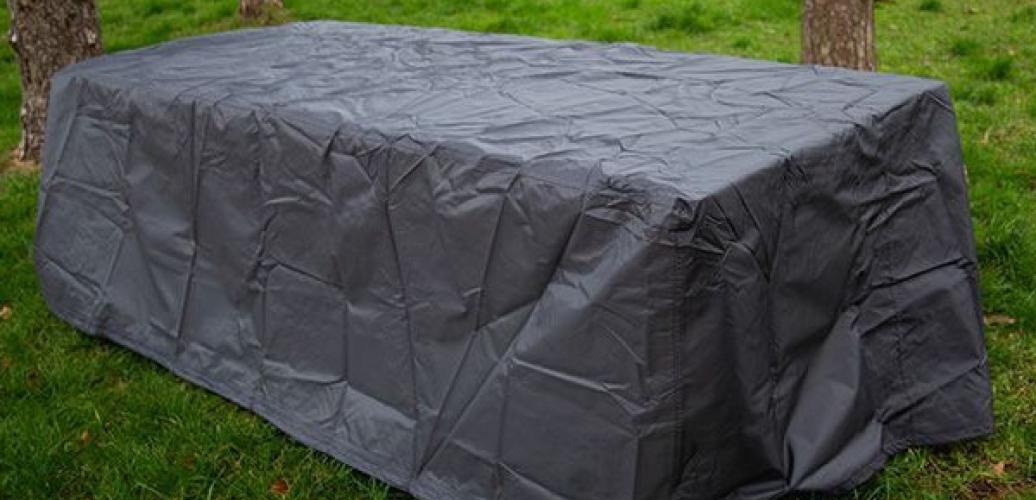
Protecting garden furniture on the Spanish coast takes a different approach to what works in northern Europe. Intense UV, salt air and sudden autumn downpours make a hostile environment for outdoor materials, and standard waterproof sheets simply can't handle it. Garden Furniture Spain has traded since 2008, with a showroom in Estepona and three warehouses serving the Costa del Sol. That's given us direct experience of how local weathering actually behaves, across more than 2,600 product types. Outdoor furniture covers here need treating as technical kit, not an optional extra.
Generic advice usually focuses on keeping rain out. But moisture trapped beneath an impermeable layer does more structural damage in Mediterranean conditions than the rain itself. What you need is protection that balances water resistance with enough airflow to stop mould and thermal breakdown building up over the long summer months. Getting the specification right is the single most effective way to extend the life of your furniture.
Why Spanish Coastal Conditions Demand Specialist Covers
Mediterranean heat ages materials faster than cooler, cloudier regions do, because UV exposure here breaks down polymers and fabrics through sustained thermal cycling rather than gradual wear. Standard UK-specification covers often fail within a single season on the Costa del Sol, they simply lack the UV stabilisers needed to withstand this level of sun. When plasticisers evaporate out of vinyl or polyester under intense heat, the fabric turns brittle and cracks, and your furniture ends up exposed to the exact elements you were trying to block.
UV Degradation on the Costa del Sol
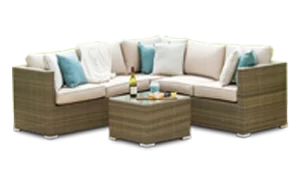
Direct sunlight breaks down the chemical bonds in synthetic rattan, cushion foams and stitching threads faster than ambient temperature alone would suggest. Rattan corner sofa sets and rope weave dining furniture need bespoke-sized, breathable covers to stop the weave cracking and the fabric mildewing in these conditions. A generic universal-fit protector won't do the job. Dark-coloured furniture without adequate UV filtration can reach a surface temperature well above the surrounding air, and that microclimate cooks unprotected materials from the outside in.
This thermal stress is cumulative. It doesn't reverse.
Salt Air and Autumn Storm Risks
Coastal properties face an extra problem: salt spray settles on surfaces and attracts moisture even on dry days. That saline residue dries out fabrics and corrodes metal fittings, particularly during the humid transition between seasons. Autumn storms bring short, sharp bursts of wind-driven rain that test a cover's fastenings far more severely than steady drizzle does, so secure fastening systems matter for stopping flapping fabric from abrading itself.
We recommend breathable, UV-stable covers over impermeable tarpaulins for Spanish coastal properties. The idea is to balance rain protection with the airflow that stops condensation damage building up. A cover that breathes lets salt-laden humidity escape instead of condensing against the furniture, cutting the risk of corrosion and staining during long periods when nobody's using the pieces.
Material-Specific Protection for Rattan, Aluminium and Fabric Sets
Different materials fail in different ways, so a one-size-fits-all approach to protection always leaves gaps. Understanding how each material responds to heat, moisture and mechanical stress lets you pick covers that target the actual failure points, rather than offering blanket coverage and hoping.
Rattan Furniture Covers and Weave Integrity
Synthetic rattan expands and contracts with temperature swings, and that movement gradually weakens the weave if it's left unchecked. Caring for rattan in Spanish sun is about more than cleaning, it means covering the furniture in a way that allows for thermal expansion without trapping heat against the strands. Tight-fitting but breathable covers stop the weave turning brittle by moderating those temperature extremes, and they also keep dust from working into the textured surface, where it holds moisture and feeds algae.
Loose covers that pool water create pressure points, and over time those stretch the weave out of shape.
Aluminium and Rope Weave Considerations
Aluminium frames resist corrosion well, but the powder coating can chip at joints and contact points, exposing bare metal to salt attack. Rope weave furniture has its own weak spot: the tensioned cords absorb moisture along their length, so mildew takes hold inside the rope and rots the core before any surface damage shows. Our rope weave furniture guide explains why fitted, ventilated covers matter for keeping cord tension right and stopping the slackening that happens when fibres repeatedly swell and shrink.
Covers for these hybrid constructions need to follow the furniture's contours closely. Any gap is somewhere wind can get in and lift the fabric off the frame.
Fabric Outdoor Sofa and Dining Set Care
Upholstered outdoor furniture asks the most of a cover, because cushion foam soaks up any moisture that gets through the textile layer like a sponge. Even waterproof fabrics eventually wet out if condensation forms underneath, so breathability isn't optional if you want the foam to last and the cushions to stay odour-free. Make sure cushions are completely dry before you cover them, sealing in damp guarantees mould, whatever the quality of the cover.
Removable cushion covers help, but a full-set cover is the real second line of defence during extended absences or bad weather.
Sizing Guides Matched to Popular Spanish Garden Sets
An ill-fitting cover causes more damage through abrasion and wind lift than no cover at all, so accurate measurement matters. Generic sizing charts rarely account for the proportions of Mediterranean-style furniture, which tends to have deeper seats and wider arms than northern European equivalents.
Corner Sofas and Modular Lounge Sets
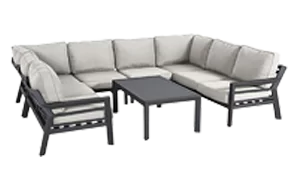
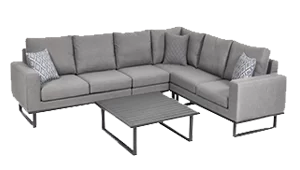
Modular sets are awkward to fit because each piece connects differently, and wind will exploit any gap between sections. Measure each module on its own rather than assuming one large cover will do, a joined cover behaves like a sail and tears under storm loads. For L-shaped arrangements, fit a separate cover to each linear section so you can secure the base independently, which stops the whole assembly shifting in gusts.
Leave five to ten centimetres of ground clearance to stop damp wicking up from the paving.
Sun Lounger and Parasol Cover Dimensions
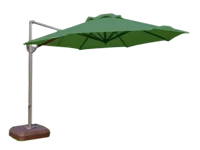
Stacked loungers need a cover sized for the height and width of the whole pile, not one unit, or wind will pull them apart. Understanding sun lounger materials and durability explains why a tight-fitting stack cover matters: loose fabric rubbing against a hot aluminium frame in direct sun wears down both the cover and the furniture finish. Cantilever parasols need a dedicated cover built for the offset arm and the folded canopy bulk, force a standard umbrella cover over the mechanism and you strain the seams while leaving the base exposed.
Always lower and lock the parasol fully before covering it, so you're not putting stress on the hinge points.
Bar Dining and Compact Terrace Sets
High tables and stools catch wind differently to low lounge furniture, so their covers need adjustable hem cords that cinch tight around narrow legs. Bar sets often sit in exposed terrace spots where updrafts are strongest, so weighted hems or tie-down straps become essential. Compact bistro sets look easy to cover, but their small footprint means a cover that catches wind like a parachute can blow the whole set over.
Measure the widest point, including chair backs, not just the tabletop.
Breathable vs Waterproof: Choosing the Right Specification
Total waterproofing and real breathability pull against each other, and favouring the first at the expense of the second invites condensation damage during humid Spanish summers. A heavy-duty tarpaulin keeps liquid water out well enough, but it traps evaporating moisture inside too, and that greenhouse effect degrades furniture faster than light rain would. Breathable covers use microporous membranes or coated textiles that block liquid droplets while letting water vapour pass through, so humidity stays roughly equal on both sides of the fabric.
That specification won't save furniture from neglect or bad storage.
For year-round use on this coast, a balance of hydrostatic head rating and moisture vapour transmission tends to protect better in practice than maximum waterproofing alone. According to manufacturers, fabrics treated with UV inhibitors and anti-microbial agents add further resistance to the specific ways materials fail in coastal Spain, where biological growth and sun-driven breakdown happen at the same time.
Seasonal Storage and Maintenance Routines
Second-home owners who leave properties empty for months face bigger risks, because small problems escalate without anyone there to catch them. A pre-departure routine cuts the odds of coming back to damaged furniture, and it extends the life of the covers as well as the pieces underneath.
Winter Preparation for Holiday Homes
Before closing up for winter, clean all furniture thoroughly to remove organic debris and salt residue that could stain or corrode surfaces once covered. Check every fastening point on your covers, velcro tabs, drawcords and buckles should all be engaged with no slack. Position furniture away from walls and overhanging vegetation to cut down on splash-back and leaf build-up, and add extra tie-downs for anything in an exposed spot, since winter storms here generate sustained winds.
Leave ventilation gaps open unless heavy rain is forecast directly against that side of the property.
Cleaning Covers Before Reuse
Covers pick up dirt, pollen and salt of their own, and that can transfer back onto furniture or wear the fabric down from outside. Wash covers at the start of each season, following the manufacturer's instructions, with a mild detergent, harsh chemicals strip the waterproofing treatment. Check seams and fastenings while you're cleaning them, so you catch wear before it turns into failure, and reapply a water-repellent spray if the fabric has stopped beading water.
Store spare covers in a dry, ventilated space rather than folded into plastic bags.
Showroom Availability and Fast Delivery Across Spain
Checking cover fit and fabric quality in person takes the guesswork out of what's ultimately a technical purchase. The Estepona showroom displays covers alongside the furniture ranges they're built for, so you can check material weight, seam construction and fastening systems before you buy. That's particularly useful for bespoke sizes, where an online description can't really show you how a cover drapes over a complex shape.
We hold stock across three warehouses, two in the UK, one in Madrid, which supports next-day delivery on the Costa del Sol when you need cover fast. Whether there's a storm coming or you're planning ahead for winter closure, that warehouse stock means your order ships without delay. Browse the range online, or visit the showroom and talk it through with staff who know exactly what this coast's weather demands.
0 comment(s)